Thirty years of visual practice. Thank you, David.
I travelled to San Francisco in June to get closer to developments in AI. The trip also gave me a day and a half with David Sibbet, who introduced me to a way of working nearly thirty years ago that has stayed with me ever since.
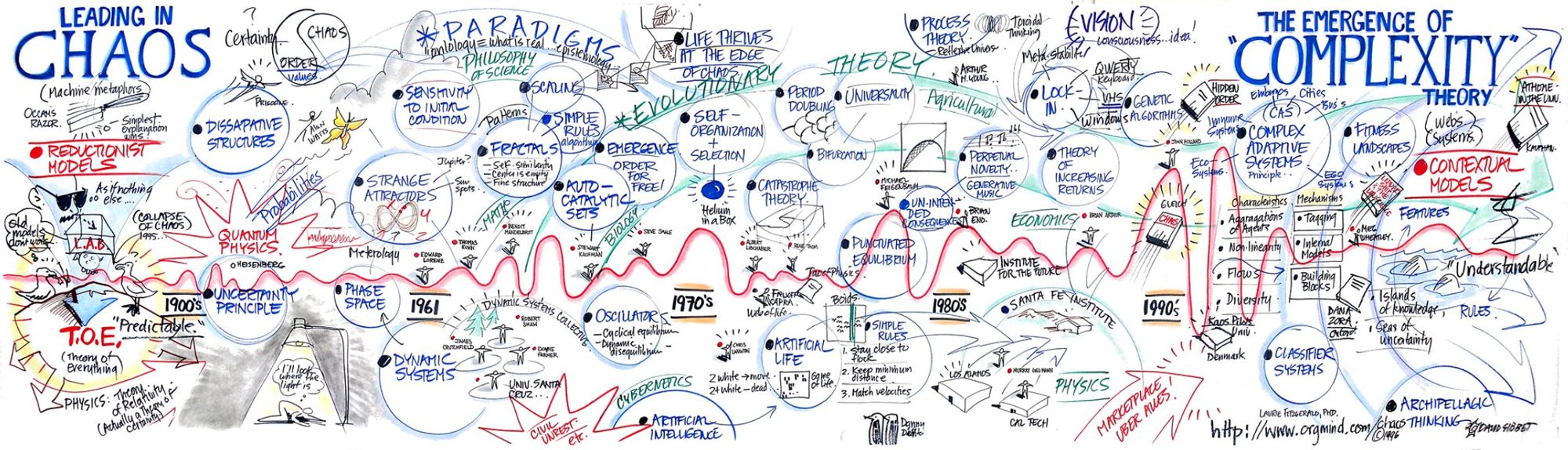
The visual overview from the 1996 lecture that set my direction.
AI is developing rapidly. At Bigger Picture, we are trying to understand what it means for our work and share what we learn along the way. That was why I went to San Francisco. I wanted to meet people working on these developments, ask questions, and get a better basis for judging what might come next.
Curiosity also brought us there with the Kaospilots in 1995 and 1996. Back then, the internet was opening up new possibilities. For me, discovering visual practice proved just as significant.
Especially meeting David Sibbet.
A sheet of paper that changed my direction
In 1996, I attended a lecture that David and Rob Swigart gave for the Coro Foundation and the Kaospilots in San Francisco. Its title was Leading in Chaos, Overview of Complexity Theory.
There were 52 of us, gathered from seven until eleven in the evening. A blank sheet of wallpaper, one and a half metres high and six metres long, gradually filled with colours, lines, and words. Towards the end, I jumped up and added our school to the timeline.
That evening was a turning point.
I had been drawing mind maps, posters, and storyboards since my teenage years whenever I needed to explain something to others. Here, I saw how visualization could help a whole group explore complex questions. We could bring knowledge together, see connections, and keep an overview as the conversation developed.
I had found a way of working that felt right for me.
I took it home, and through the Kaospilots, we helped introduce the practice in many places across the Nordic countries and the rest of Europe. Meeting David also brought me into the community around the International Forum of Visual Practitioners. Over the years, I have met and learned from many skilled people there. First as one of the younger members, later as one of the more experienced.
Nearly thirty years on, I was back in San Francisco to visit the man who had become my mentor.
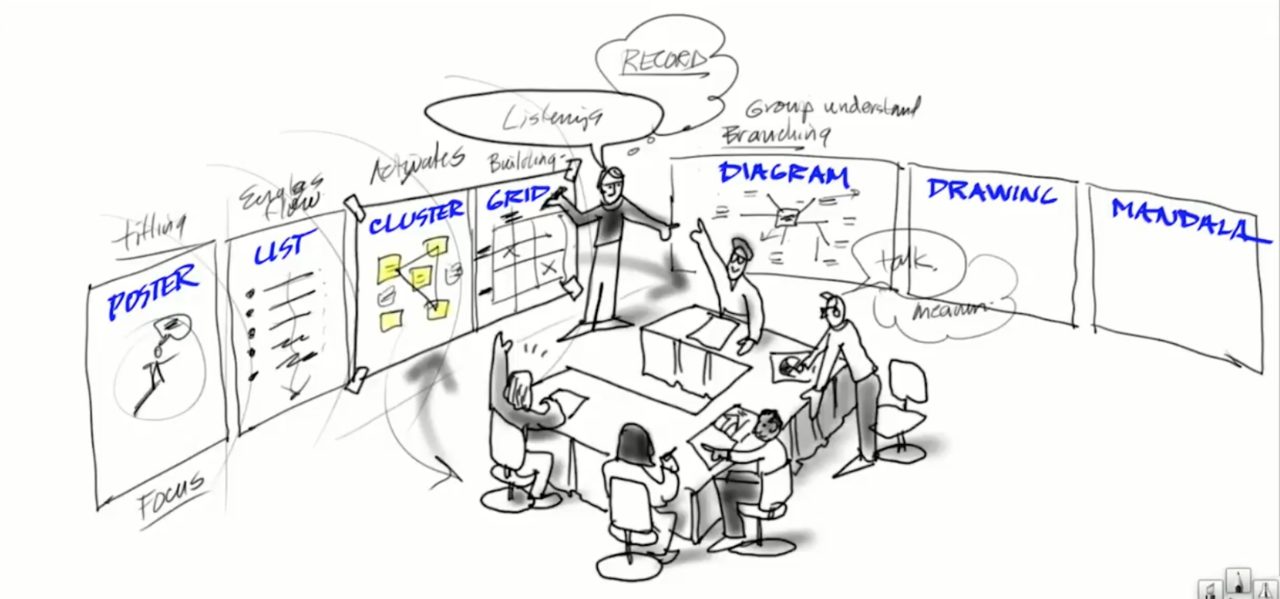
Group Graphics: some of the concepts behind the practice.
The work we build on
David has helped shape graphic facilitation as a field. Through his books and his work at The Grove Consultants International, he has developed concepts, tools, and visual approaches that many of us use today.
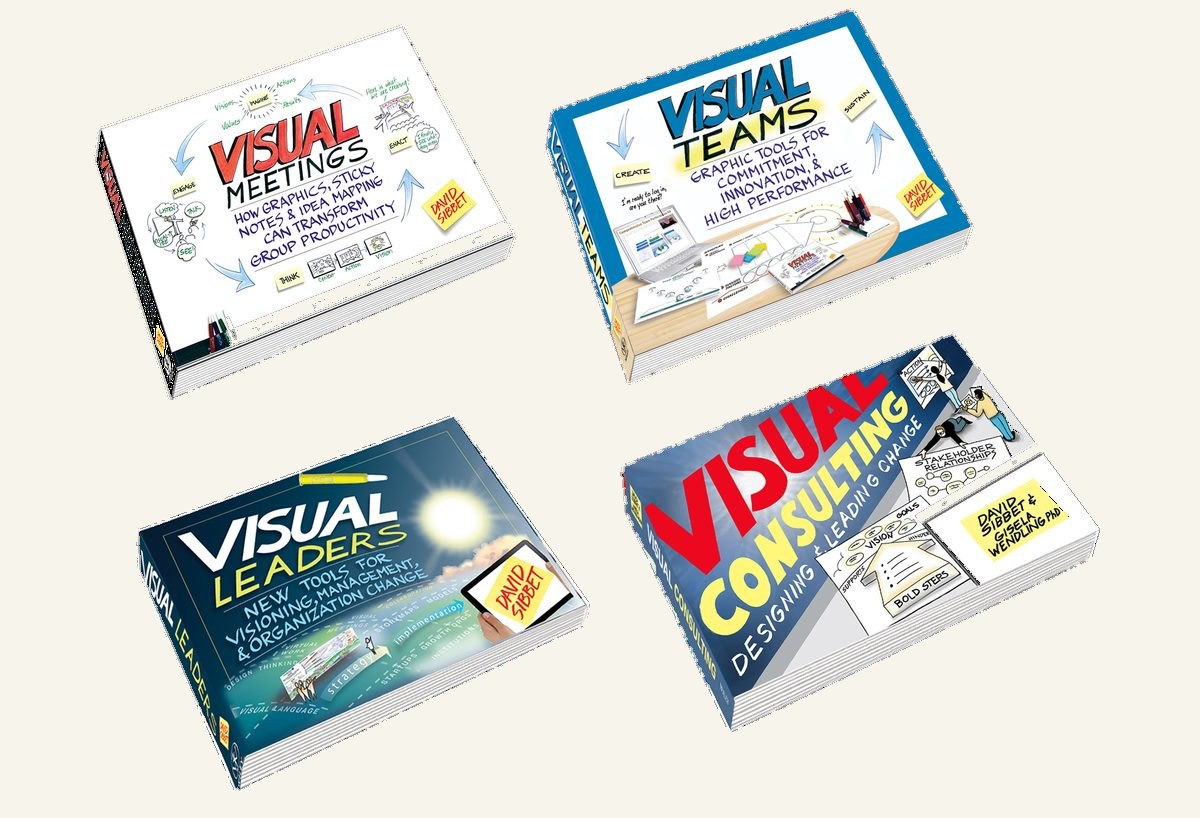
He worked with companies including Apple, National Semiconductor, HP Labs, Sun, and Agilent. Alongside that work, he explored how groups think and make sense of things together, and how visualization can become part of the process itself.
The Game Plan, the History Map, the Context Map, and the Five Bold Steps are some of the tools that emerged from this work. They are available as Graphic Guides® from The Grove. The Drexler-Sibbet Team Performance Model belongs on that list too.
These tools have meant a great deal to us and to many of the organizations we have worked with.
Our own book builds on this tradition. At Bigger Picture, we work with Visual Collaboration, and we have tried to make visual ways of working easier to learn and use. We want more people to benefit from drawing, thinking, and talking together.
A day and a half with David
David had offered to set aside a day for my visit. It became a day and a half.
It was a pleasure to get into his car and have time to talk. About the old days and what is happening now. About AI, our profession, and the need for both change and inspiration.
We drove through Silicon Valley to Apple’s new headquarters and the Googleplex. We talked about the Institute for the Future and met with Bob Horn and Paul Saffo.
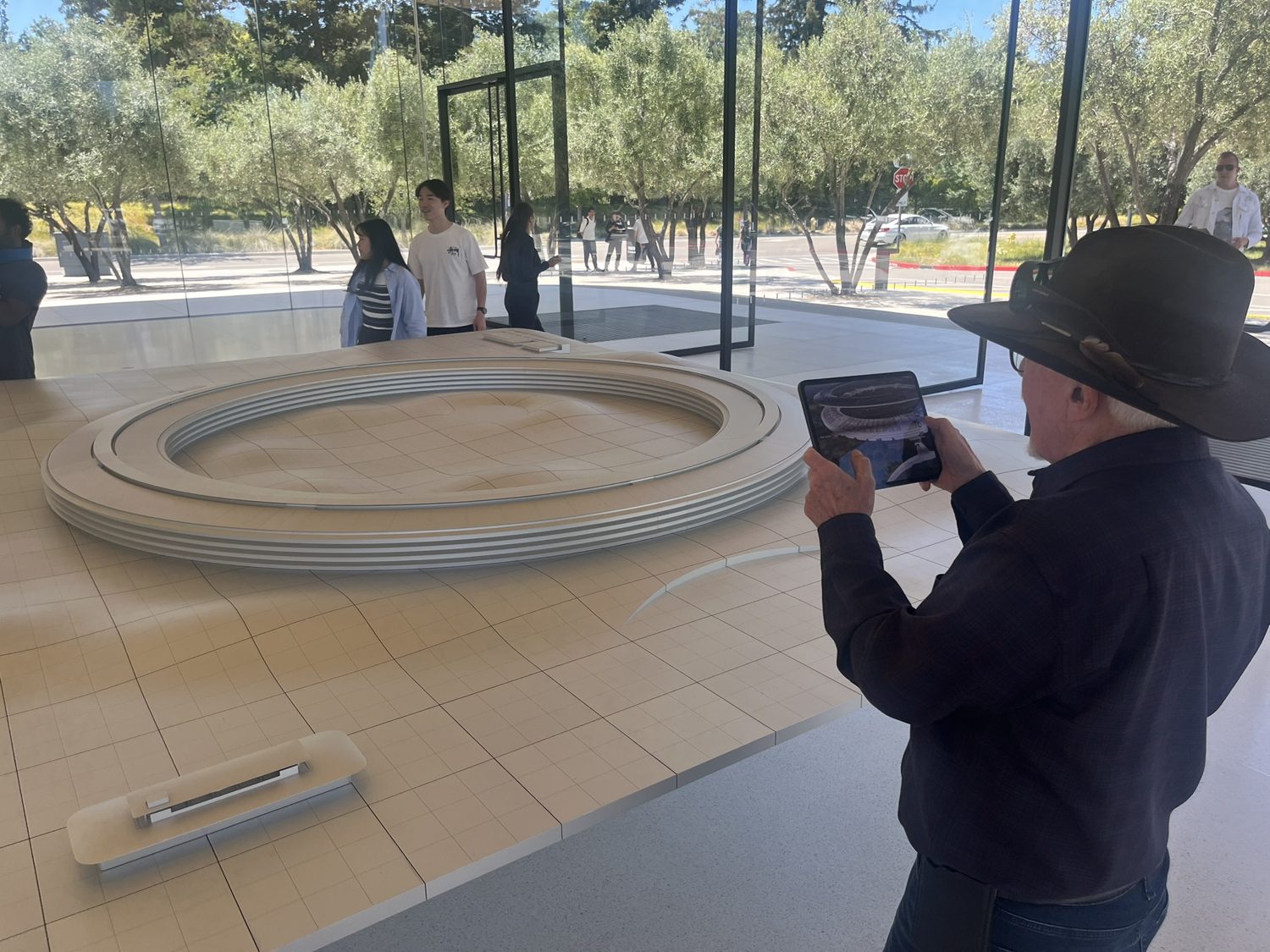
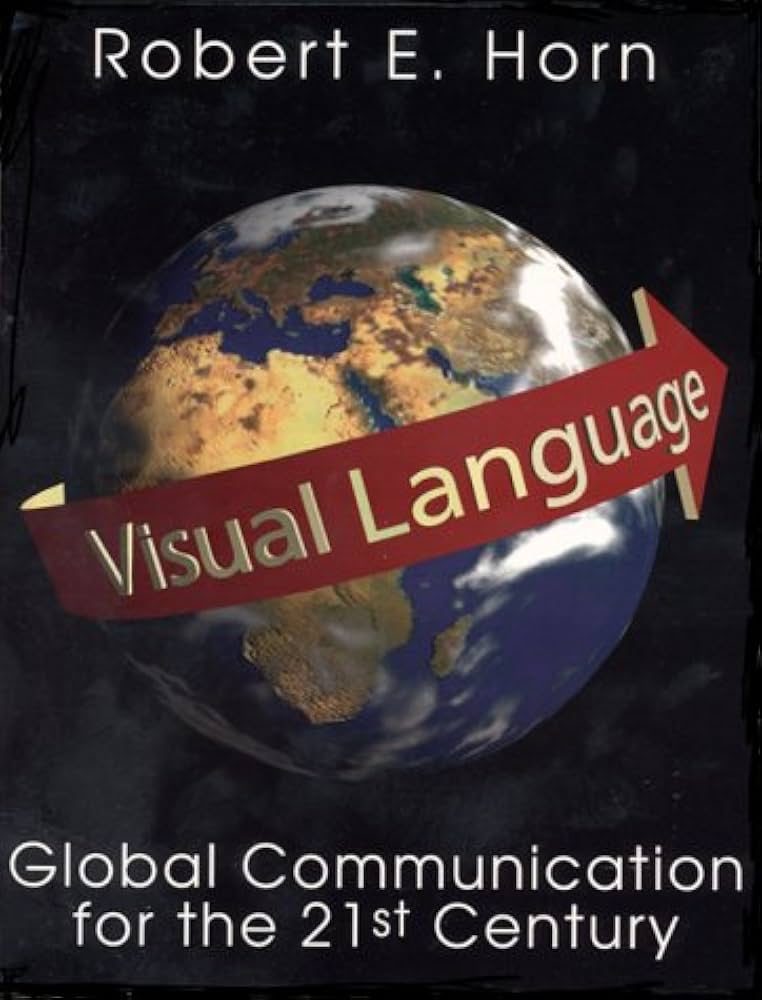
Bob Horn is another pioneer of visual practice. His book Visual Language explores in depth how images, words, and graphic elements can work together as a structured language.
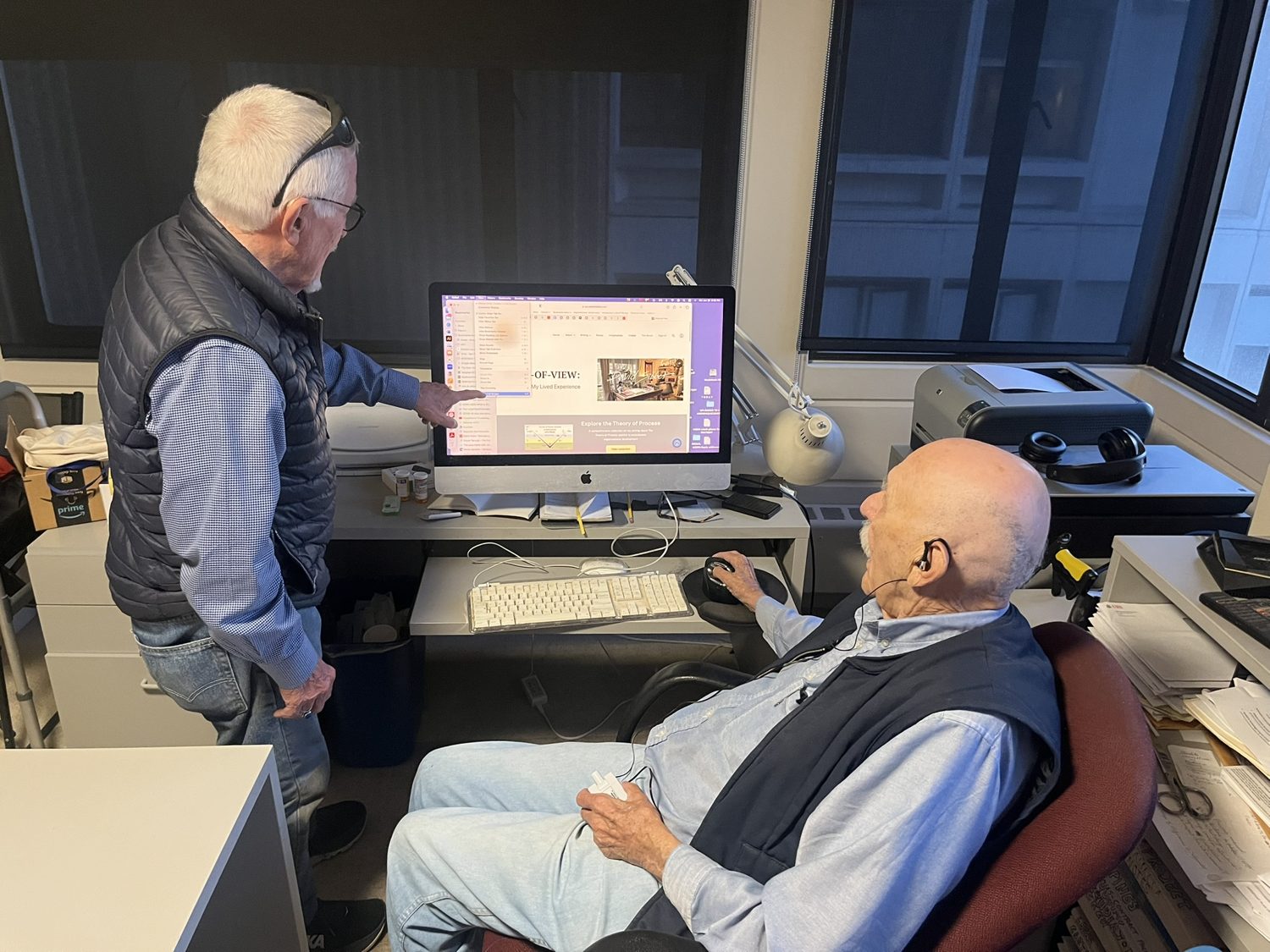
He still draws large, complex history maps. It was a pleasure to see his work and discuss how we can help teams and organizations understand and work with complexity.
We were three nerds with plenty to talk about. One idea led to the next.
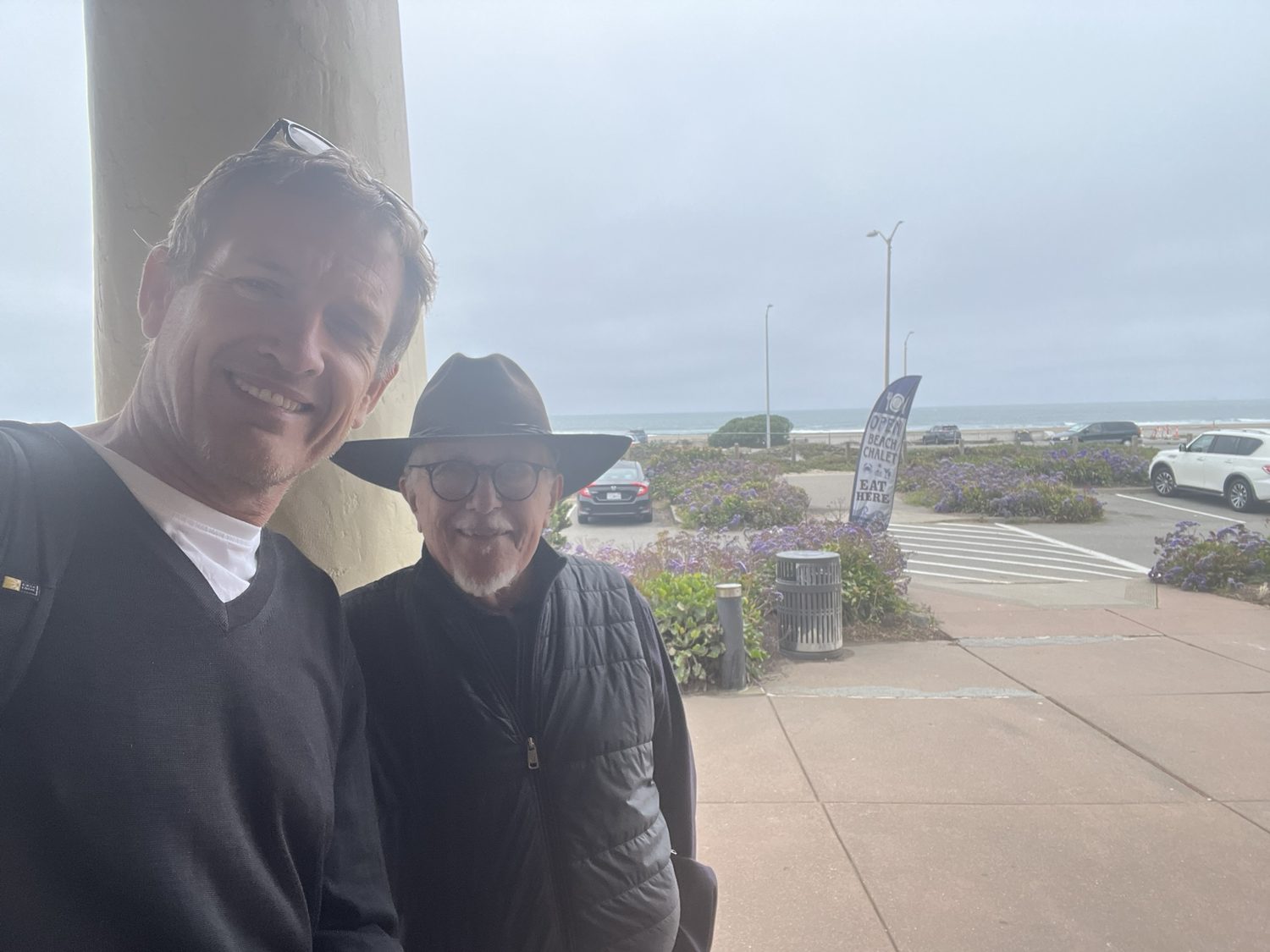
At Priscilla’s, we were joined by Paul Saffo, a longtime friend of David’s whom I know through the Institute for the Future community. We talked about the technology companies and the people behind them. About their influence, for better and worse, and where these developments might take us. And about what gives us reason to hope.
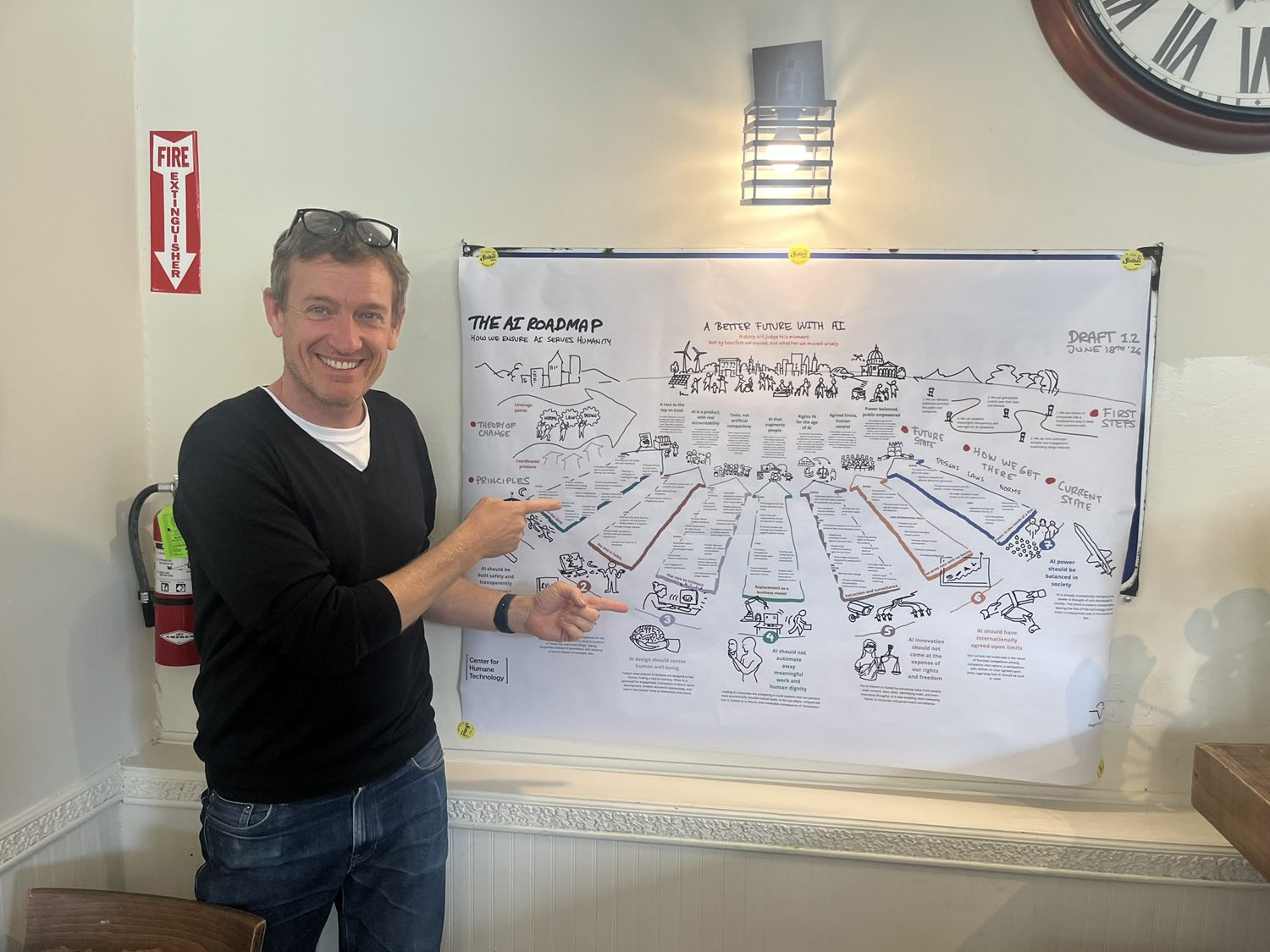
Thank you, Paul, for the conversation and your feedback on the AI roadmap.
Along the way, I found myself thinking about how I would like to be as I grow older. I hope I can retain the curiosity, energy, and willingness to play with ideas that David has.
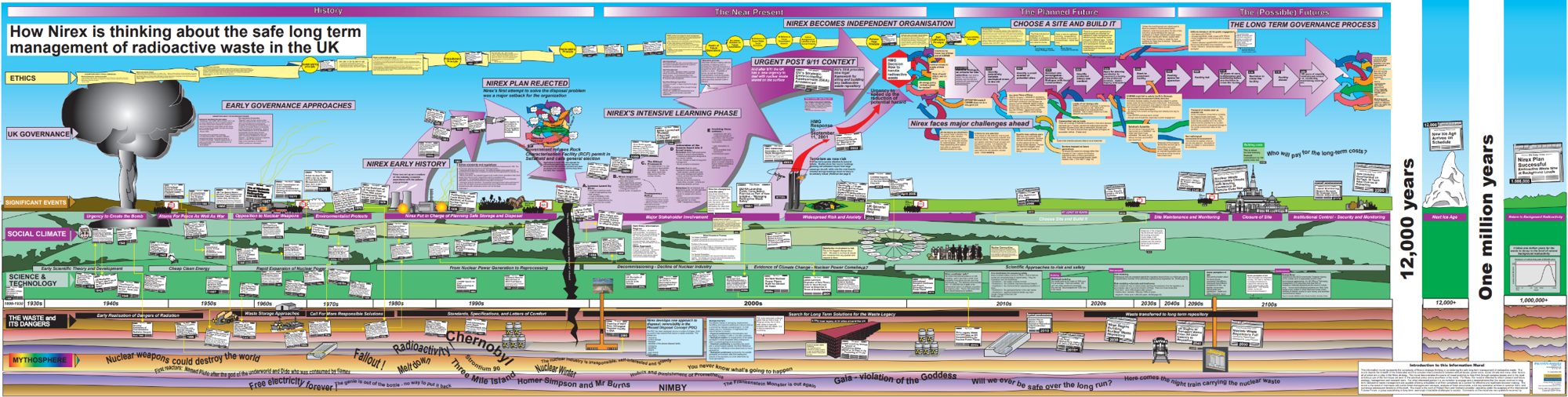
Bob Horn still works on large, complex history maps.
Conversations about AI, paper, and our craft
Back at David’s home, the conversations continued, including over dinner with Gisela.
We talked about what AI can help us with in our work and where it falls short. I shared my notes on the conversations we need to have about AI: in education, at work, in society, and as individuals.
We also discussed what AI means for those of us who work visually. What do we share? What do we upload? And what do the systems learn from the material we give them?
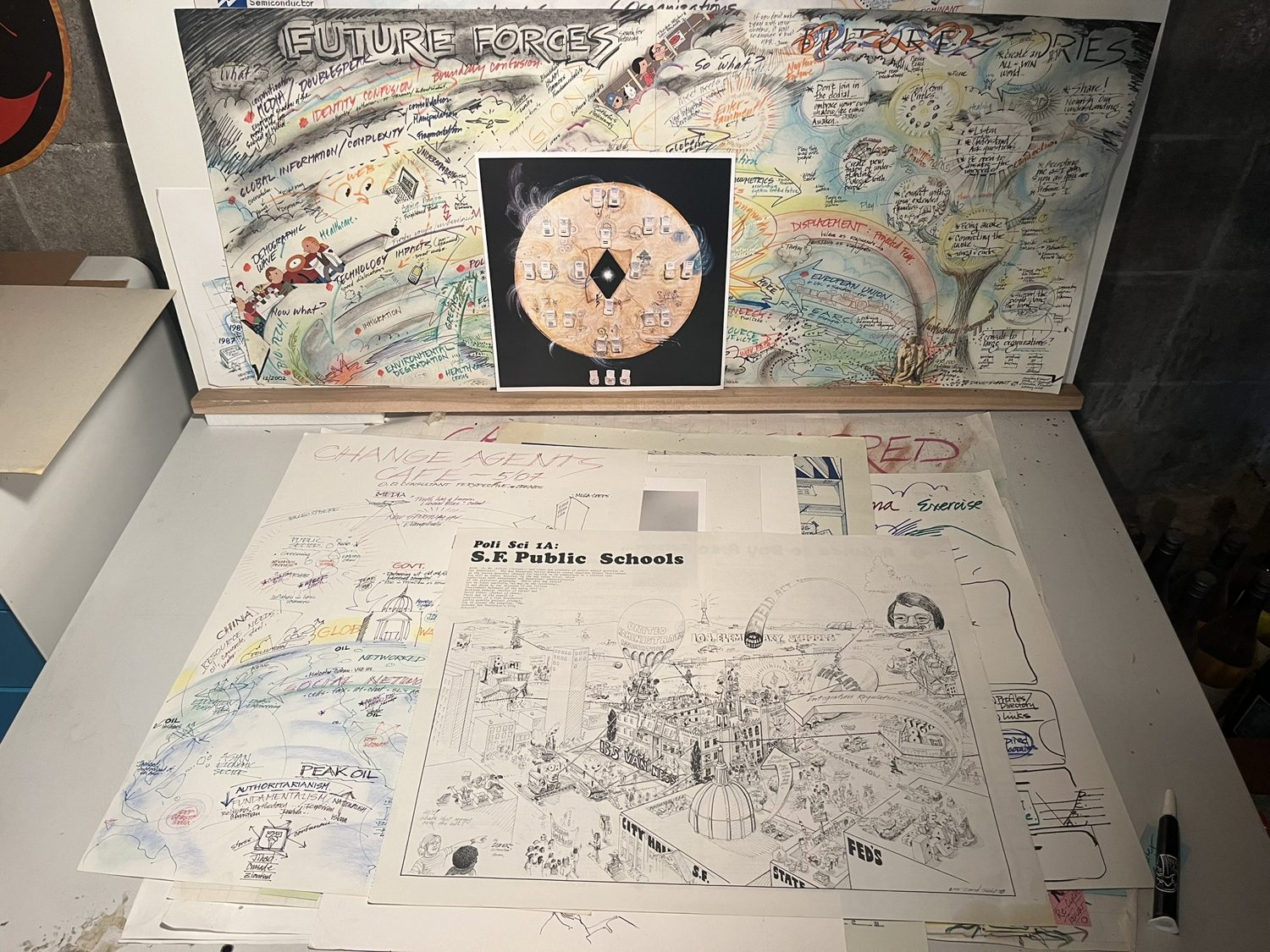
We kept returning to work drawn by hand on large sheets of paper. To the qualities of notes and drawings that take shape while people are gathered in conversation.
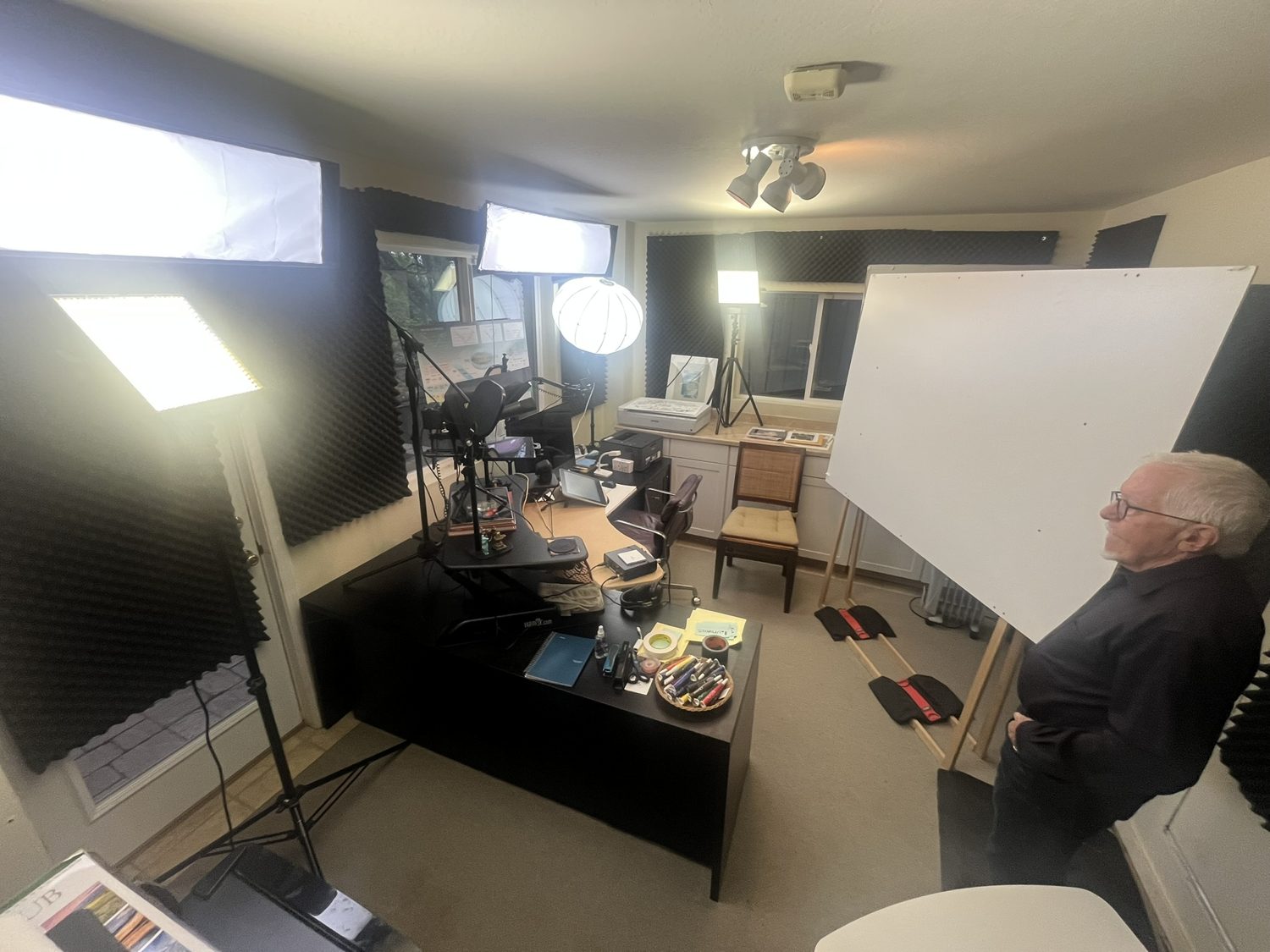
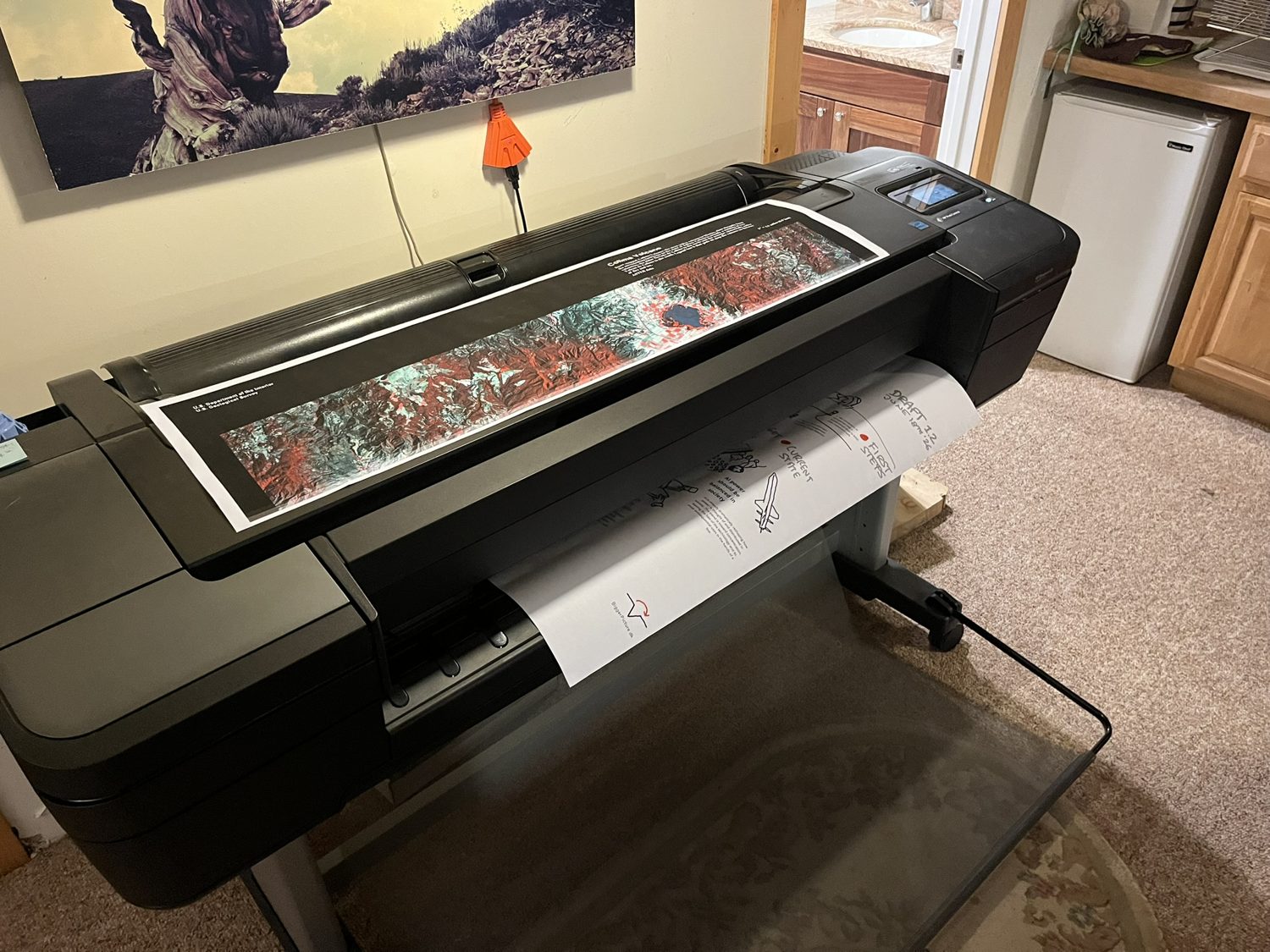
David showed me some early illustrations and his streaming studio. We also printed the AI Roadmap poster for the Center for Humane Technology on his large-format printer.
Bringing something back
There was something new about this visit.
For years, I have learned from David, Bob, and Paul. This time, I felt I had something to bring them too: my experiences and thoughts on how AI might become part of our work, the possibilities it opens up, and where we should set limits.
This is new to all of us.
I see it as part of my role to carry what I have learned into our work with AI. To explore what we can use while holding on to the qualities that make our craft valuable.
To everyone with visual thinking in their bloodSome have worked visually for decades. Others have only just discovered what happens when people start drawing together. Others are still finding their way to it.
I am glad to be part of this community and grateful for everything David and so many others have taught me. I will do my best to pass it on and explore how it can be used in new settings.
For me, this is a deeply human skill. We can make our thoughts visible, explore each other’s perspectives, and build a shared picture of what we want to achieve. It helps us work out what we can do together.
I look forward to more of those conversations.
Thank you, David.
More insights
The Big Technology AI Summit
One room, AI’s newsmakers on stage, and one question underneath it all.
Read →Everyone is building AI agents
Almost none of them work together. Notes from the Databricks summit.
Read →Bring the conversation to your team
A half-day that turns AI uncertainty into shared direction.
See the workshop →
