The Big Technology AI Summit
One room, AI’s newsmakers on stage, a rooftop reception after. I went to listen, and to feel where the conversation actually is right now.
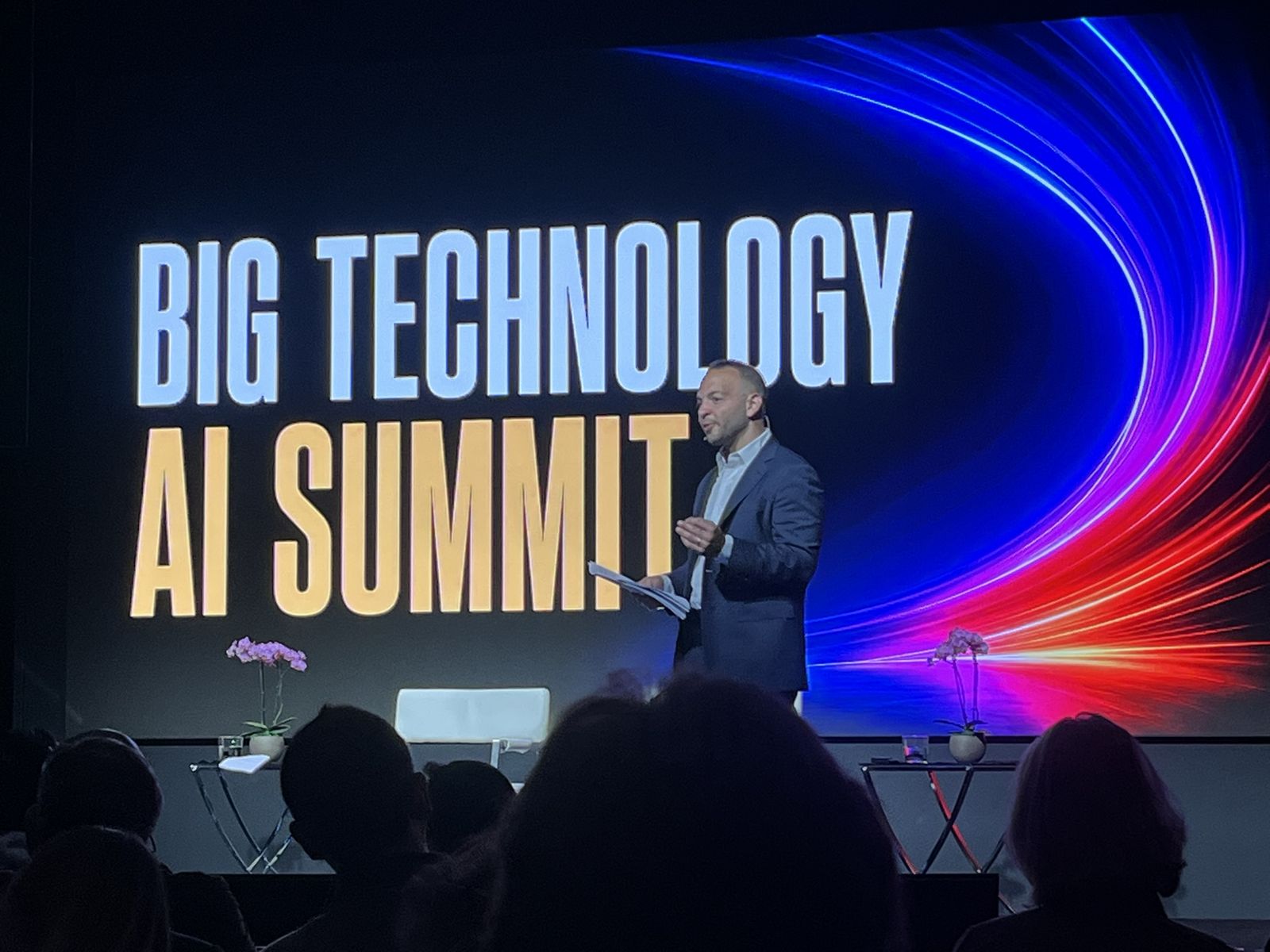
Alex Kantrowitz opening the Big Technology AI Summit, Commonwealth Club, San Francisco.
On 18 June I spent an afternoon at the Big Technology AI Summit at the Commonwealth Club in San Francisco. A day of live interviews hosted by Alex Kantrowitz of Big Technology, presented by PwC. You can hear the summit segments on the Big Technology podcast, released 19 to 24 June, on Spotify.
Here is what I heard, session by session, and the conversations that followed on the patio.
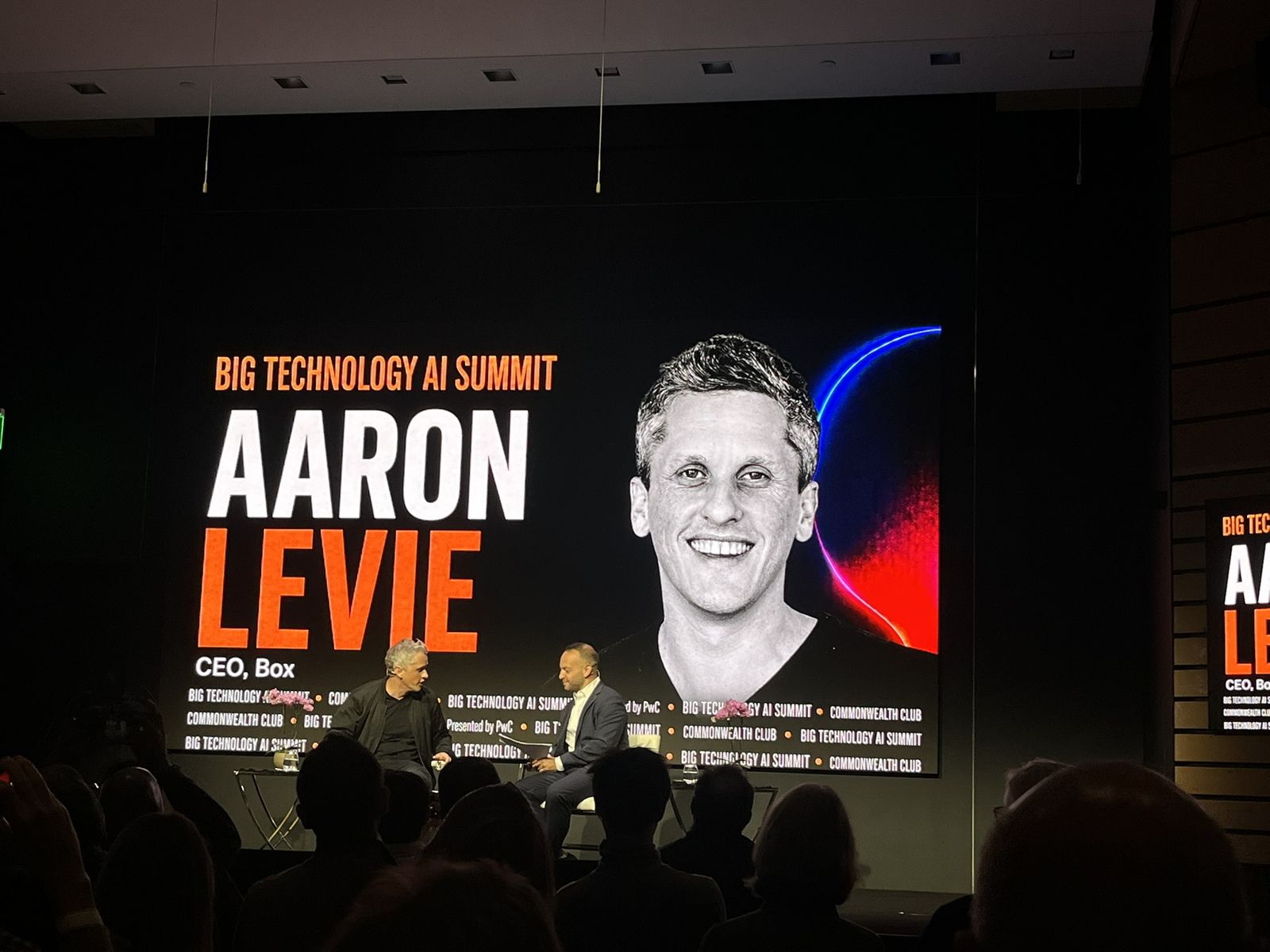
Aaron Levie, Box
The opening session with Aaron Levie of Box started on big news: Anthropic’s Fable had just been stopped under US government pressure. It could no longer be used outside the US, and Anthropic had to cut off anyone using it. A wake-up call for everyone.
If the state pulls a model, the decelerationists get the thing they want, an actual stop. But a government doing it has heavy consequences, and it is a wake-up call for other countries. If the US frontier slows while open models, from China for instance, keep accelerating, the real question becomes who controls what.
Alex Kantrowitz and Levie talked through scenarios. One where the frontier holds a three to five month lead, one where it does not. The read I came away with: healthy competition between US frontier models, left to run, is seen as a good thing, and rushing ahead as the safer bet.
Then Europe. There was a fun image of a big, slow French cat holding hands with the American models, the cat being Mistral.
The conversation continued: are we doing the right things, or just doing things right? Organisations have gone from spending five thousand tokens to a million. Is that a legitimate spend? Levie’s view was that the experimentation phase is winding down. For Box the productivity gains are real and exponential, mostly in engineering.
The infrastructure race
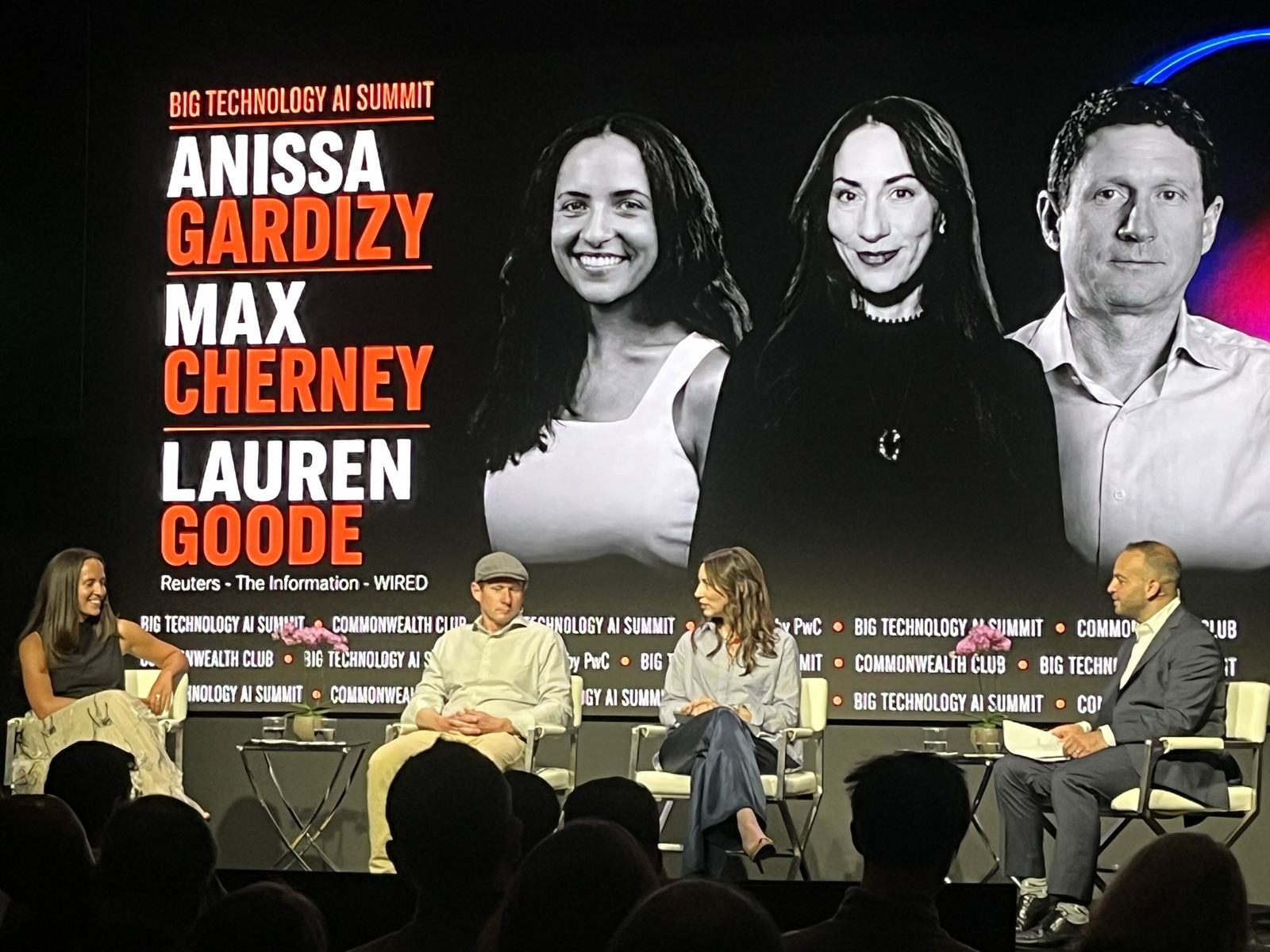
A panel with Anissa Gardizy of The Information, Max Cherney of Reuters, and Lauren Goode of WIRED. Same underlying question: are we on the right track?
The takeaway that stuck: a large share of the planned data centres are delayed, half, maybe more. That sets up shareholder disappointment and a live debate about whether this busts and the bubble pops. The chip chokepoints in Taiwan and the Netherlands came up, and how the big models play together and apart. For people in the news business, there was a smile. If it gets bumpy, it will be a lot to write about.
The real ROI of AI tokens
The token question got its own session. It is real inside organisations, and it is a problem. I think the next phrase we will all learn is token minimising.
One example: Uber burned through its entire annual AI budget in the first three or four months of 2026. So what is the baseline, and the question everyone should be asking, and is asking: are we getting a return on our AI initiatives? What is actually worth it?
The image I will keep: are you picking up the milk in a Lamborghini? With open models more than an order of magnitude cheaper, the likely shift is everything light moving to open models, with the heavy, expensive models kept for the genuinely heavy work. Which raises its own question: what does the world look like when most use runs on the cheap open models, and where does that leave the frontier?
Alex Stamos, Corridor
Alex Stamos, Chief Product Officer at Corridor and former Facebook security chief, gave the starkest line of the day. His warning: do not slow down. He sees that as his lane, security, where he has spent his career. Stopping models, in his view, is the mistake, because these models can detect security risks and should be in the field. Slow down and other models take over.
He thinks the lead is much shorter than people assume. The US has open, transparent communication. China we mostly cannot see, the front of house and the back of house. He framed it as a war not to be lost. His line, roughly: let us not lose another war this weekend. He expects a comparable model from OpenAI soon, and hopes the stop gets lifted.
Mike Krieger, Anthropic Labs
Everyone wanted to know what is going on inside Anthropic. Mike Krieger, who leads Anthropic Labs and co-founded Instagram, could not speak to all of it. Asked how close he sits to the user-facing roadmap, the answer was: close, moving fast, at arm’s length from some of it given his new role.
Is the “we are the reliable, transparent source” line just clever marketing? His answer: we are calling things what they are and being as transparent as we can. He described Labs as trying to buy enough time to study how AI is used today and to look around corners to how it will be used tomorrow.
Asked whether companies building on top of Anthropic just get overwritten when Anthropic builds what works, he leaned on identity. They call themselves an ethical, mission-driven startup, with a philanthropic arm. What is new, he said, is that the models now have agency and self-knowledge: give one an environment and it can act across it. His phrase, that what is in my head and what is in the model are starting to be the same. He left on the image he keeps using: I am going to go and try to look around corners.
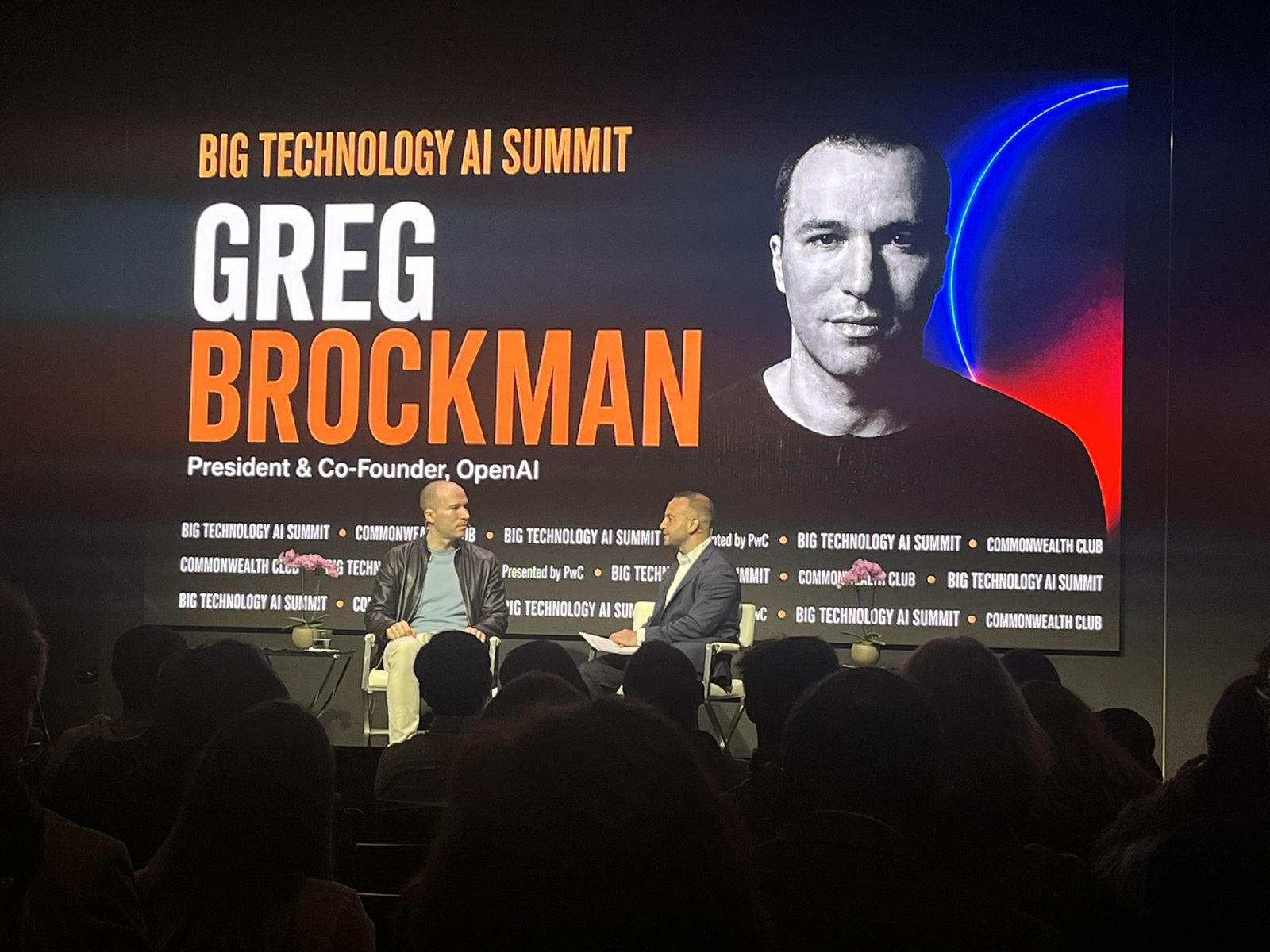
Greg Brockman, OpenAI
The closing keynote, Greg Brockman, President and co-founder of OpenAI. The facts he opened with: a roughly one trillion valuation, a billion users.
His picture of where this goes: towards almost no interface. Fewer buttons. The AI understands your intent and goes and does it, and you speak to it. Agents change shape. The hard part is trust, learning to grant the AI responsibility. The direction is OpenAI as an operating system, which means rethinking everything. The biggest shift is towards conversational tools and real-time feedback.
The open question he sat with: how much better does this get, and when do improvements stop? It all centres on compute as the scarce resource. Cut the price and people just use more. He expects spend controls to ship, and expects it all to get much cheaper, which multiplies everything.
The floor opens
Then questions from the room. Plenty on the tech and on token maxing. The one that stayed with me came from María Sara Roberts of Propeller, the one voice raising AI for good: how do we make this development better for the planet and for people?
The accelerationists are moving at light speed. The people pausing to ask about the implications are too few.
I did not hear a very specific answer. But I think it is the question we have to work out fast.
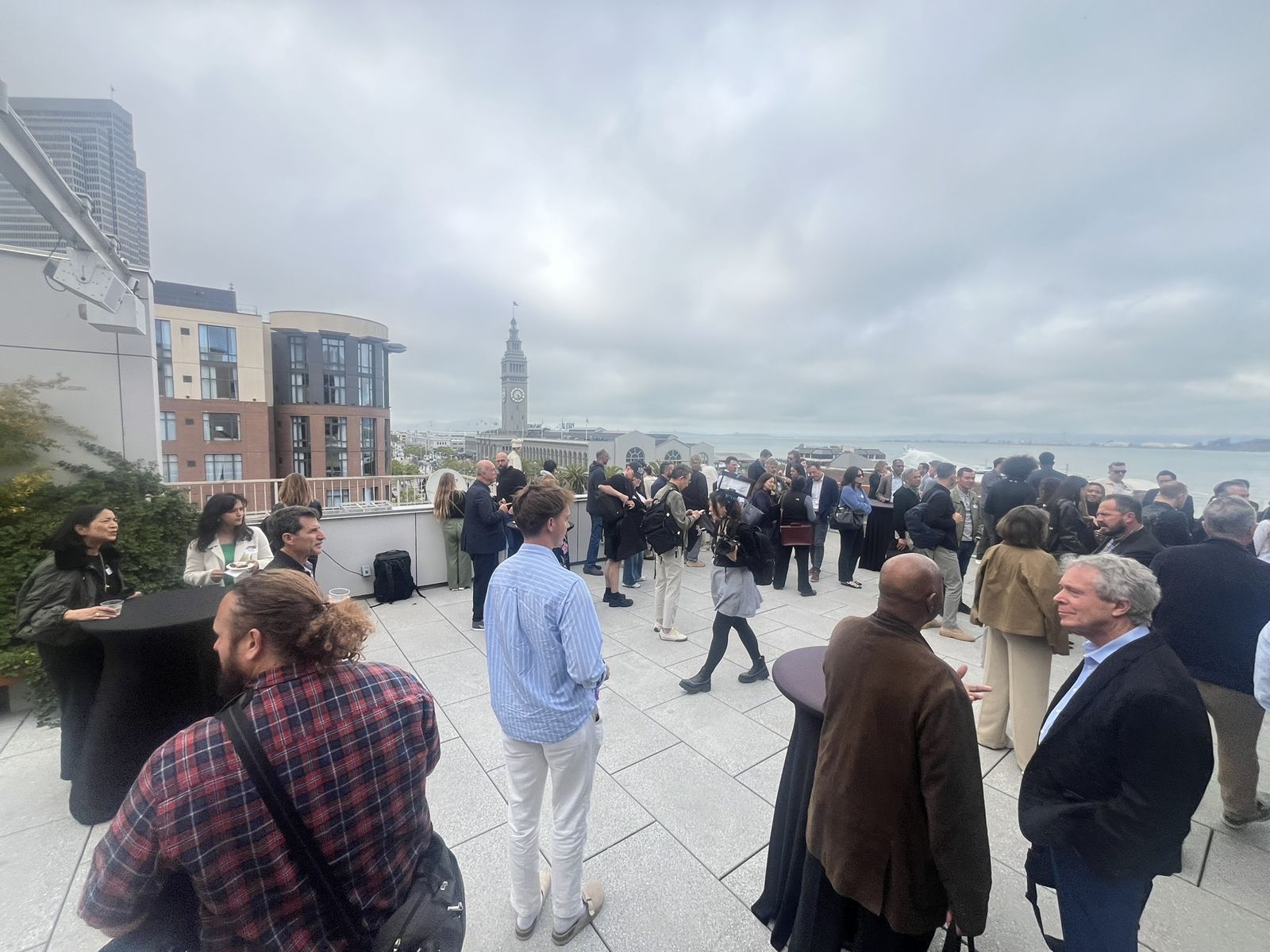
The rooftop reception over San Francisco Bay, Ferry Building behind.
The people I met
After the session everyone moved to the rooftop reception over the bay, looking out at the Ferry Building. More conversations.
Ata Onat from Turkey, a one-man AI company moving at the speed of light. His take: AI is being built in, you can do so much more now, and if you are not in that game you are out.
Chance Baker and Christopher Ogbuehi from Virus Watcher. AI for good, made concrete: their tools and data can map the spread of a virus well before our normal systems, which matters for the UN. We may meet again at AI for Good in Geneva in early July.
Chester Jungseok Roh, a South Korean serial entrepreneur back after time in the medical field and ready to dive in again. The reach of his network, and an open conversation about what is moving in South Korea and the Nordics, was a highlight.
And an accidental coffee with Lauren Goode of WIRED, where I asked for the highlights of the AI spectrum in San Francisco, accelerationists to decelerationists, and got sharp pointers on who to talk to and where to go.
What I carry home
Being in that room was being in the river, right where it flows fastest. My job back home is to find the small streams and trickles of it in a Scandinavian context.
It is a striking amount of water. A river, a flood, a tsunami. You can tap into it, you can surf it, or you can be knocked over by it. However I turn it over, I keep landing in the same place. Clarity is a scarce resource. That is where we have a role.
More insights
Everyone is building AI agents
Almost none of them work together. Notes from the Databricks summit.
Read →Our journey into AI: the visual story
From jumping in to building our own AI-supported method.
Read →Bring the conversation to your team
A half-day that turns AI uncertainty into shared direction.
See the workshop → Bigger Picture